
Our programmes
The five PetitsBoss worlds
Your child aged 4 to 13 can explore one or several. Each world builds specific skills, useful at school and in life.
Logic & early learning
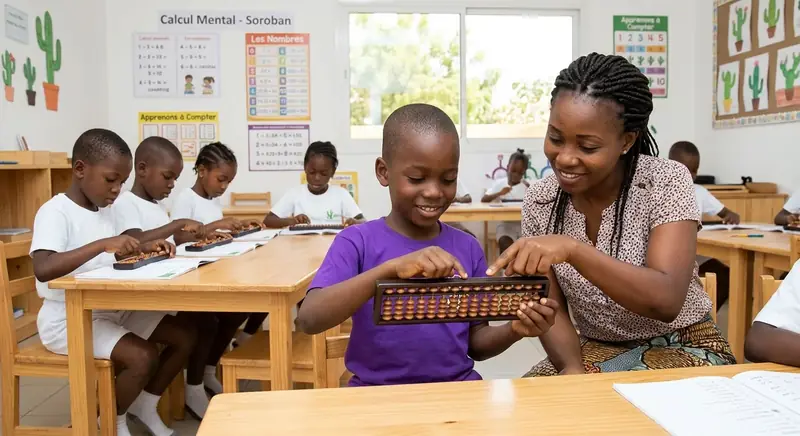
What if your child discovered the power of mental maths?
With the Soroban abacus and the ABACUS method, children handle numbers with their hands, then learn to picture them in their head. Maths becomes a game, focus grows, and confidence in maths follows, at school and at home.
What your child does
- Moving the Soroban beads to count, add and subtract
- Moving from the abacus to mental calculation (visualisation)
- Taking on speed challenges at their own level
- Logic and memory games
What they develop
- Focus
- Memory
- Mental visualisation
- Quick thinking
- Logic
- Confidence in maths
What it changes at school
Safer calculations in class, less fear of maths, better attention during lessons and homework.
How you follow their progress
- Alerts on arrival and at the end of each session, notification of absences
- Progress of skills and marks in the Parent space
- Projects, presentations, awards and end-of-path certificate
Open programmes in this world
Open programmes in this world appear here as soon as they are published.
Digital
Not just using digital tools. Learning to understand them and create with them.
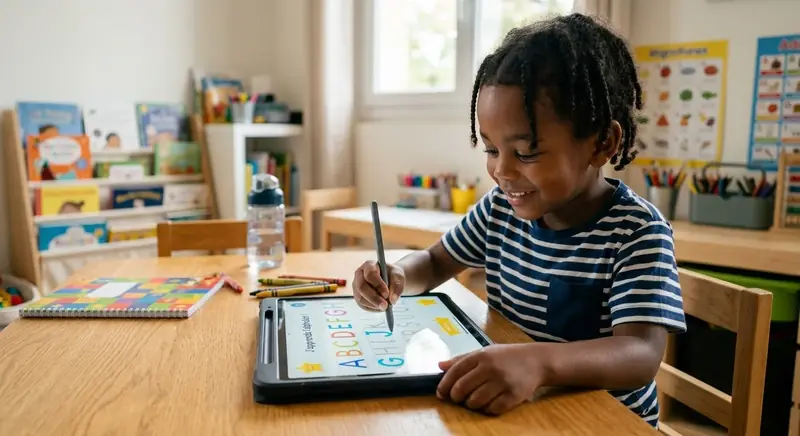
Each child works on their own computer (except in group workshops). They learn to use it properly, create documents and presentations, then discover how programs think. From user, they become creator.
What your child does
- Getting to grips with the computer: keyboard, mouse, files
- Creating documents and presentations
- Discovering algorithmic thinking and the basics of coding
- Discovering the inside of a computer, with a supervisor
- Good online safety habits
What they develop
- Independence with screens
- Logic
- Organisation
- Digital creativity
- Digital safety
What it changes at school
Better presented school projects and ease with the tools used in secondary school and later at work.
How you follow their progress
- Alerts on arrival and at the end of each session, notification of absences
- Progress of skills and marks in the Parent space
- Projects, presentations, awards and end-of-path certificate
Open programmes in this world
Open programmes in this world appear here as soon as they are published.
Technology & making
From idea to prototype: your child learns to build their first inventions.
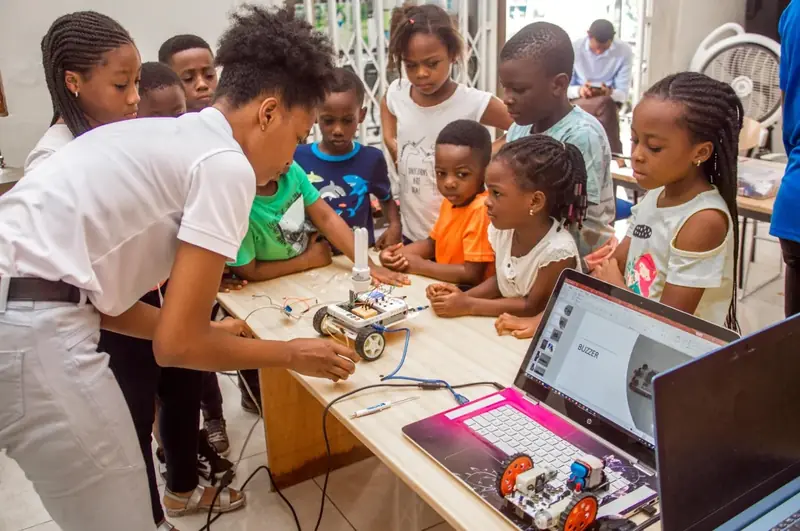
In small teams, children build circuits, program an Arduino board and make small robots move. They test, make mistakes, fix them, and finally see their project work. Hands-on science and teamwork.
What your child does
- Building circuits with LEDs, sensors and motors
- Programming an Arduino board
- Building and driving a small robot
- Presenting the team project
What they develop
- Scientific thinking
- Problem solving
- Teamwork
- Perseverance
- Public speaking
What it changes at school
Science and technology become concrete: children understand what they see in class because they have already built it.
How you follow their progress
- Alerts on arrival and at the end of each session, notification of absences
- Progress of skills and marks in the Parent space
- Projects, presentations, awards and end-of-path certificate
Open programmes in this world
Open programmes in this world appear here as soon as they are published.
Creativity & expression
Their ideas deserve to take shape. Let’s give them the means to express them.
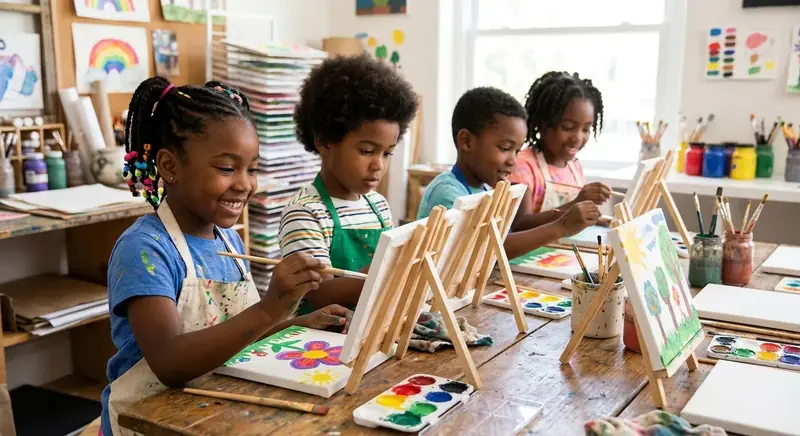
Drawing, painting, writing, crafts, then speaking up: children learn to imagine, make and present what they created, in both languages.
What your child does
- Drawing and painting
- Writing short stories
- Making things by hand
- Presenting their creation to the group
What they develop
- Imagination
- Speaking skills
- Self-confidence
- Patience and care
- Bilingualism
What it changes at school
A child who dares to raise their hand, give a presentation and stand up for their work in class.
How you follow their progress
- Alerts on arrival and at the end of each session, notification of absences
- Progress of skills and marks in the Parent space
- Projects, presentations, awards and end-of-path certificate
Open programmes in this world
Open programmes in this world appear here as soon as they are published.
Learning through play
Play, think, search, discover: every challenge becomes a chance to learn.
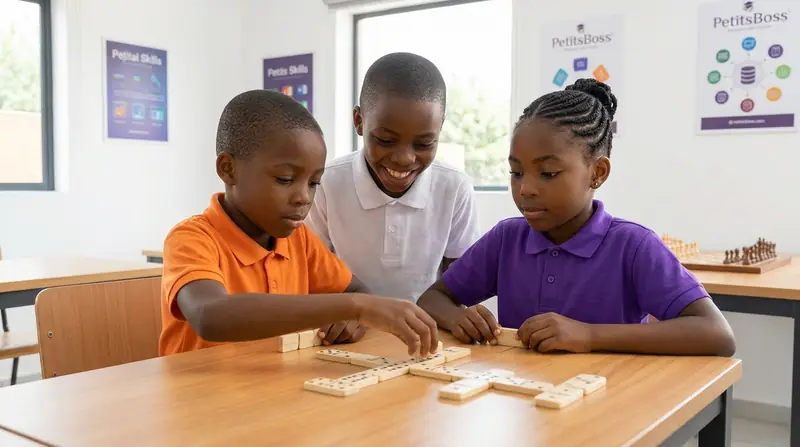
Dominoes, chess, puzzles, memory games and activity books: play is a real learning tool. Our learning games, matched to the bilingual school curriculum of the child’s class, can also be played at home with parents, with no Internet connection.
What your child does
- Logic and strategy games (dominoes, chess)
- Puzzles and thinking challenges
- Memory games
- Activity books and learning games matched to their class, also at home (offline)
What they develop
- Strategy
- Memory
- Numeracy
- Perseverance
- Respecting rules
What it changes at school
Class topics revised through play, and parents who support and see progress, even without Internet.
How you follow their progress
- Alerts on arrival and at the end of each session, notification of absences
- Progress of skills and marks in the Parent space
- Projects, presentations, awards and end-of-path certificate
Open programmes in this world
Open programmes in this world appear here as soon as they are published.